





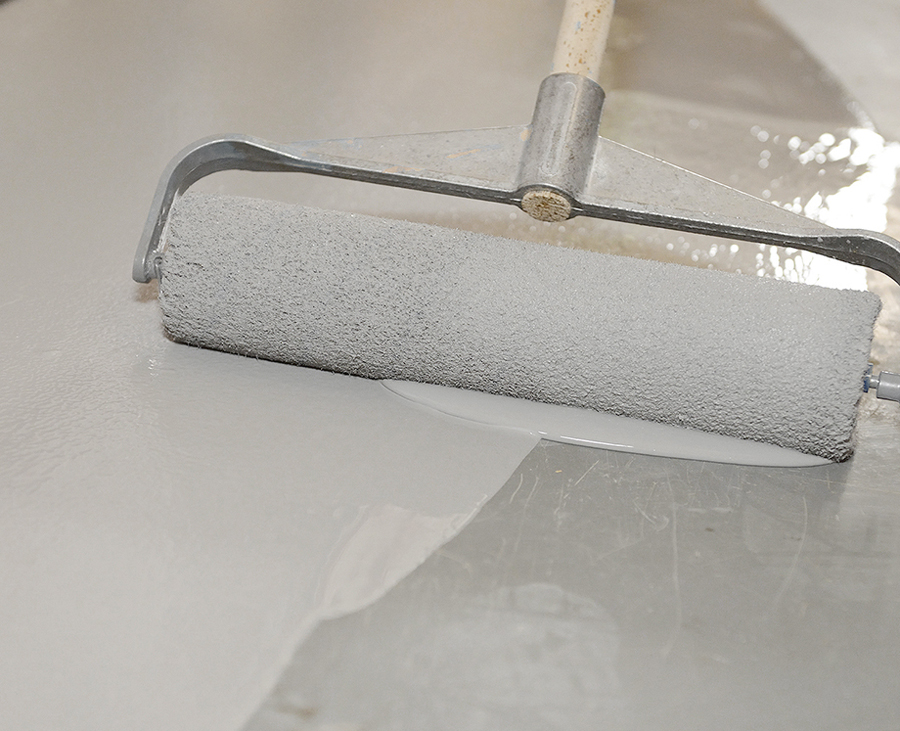
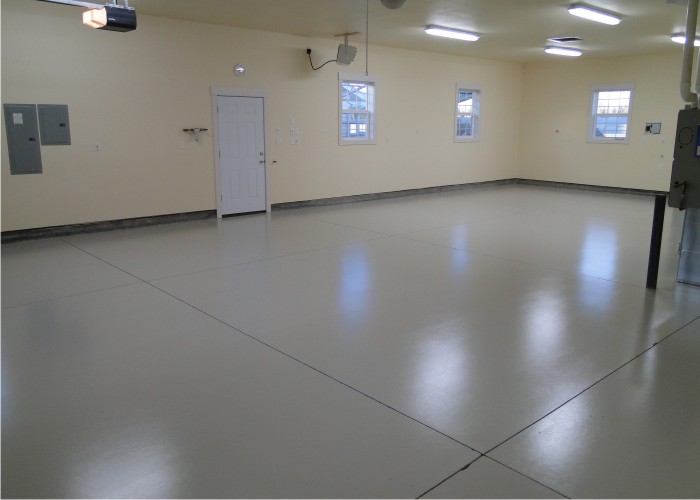
Water Based Epoxy is a high performance, commercial grade, 3:1 epoxy coating. The kit includes a Part A resin and a Part B hardener, to create an exceptional showroom quality finish. It resists stains, abrasions and chemicals such as oils and grease etc. Water Based Epoxy should be considered for all interior concrete sealing applications where superior durability is required and solvent odors and flammability are not acceptable.
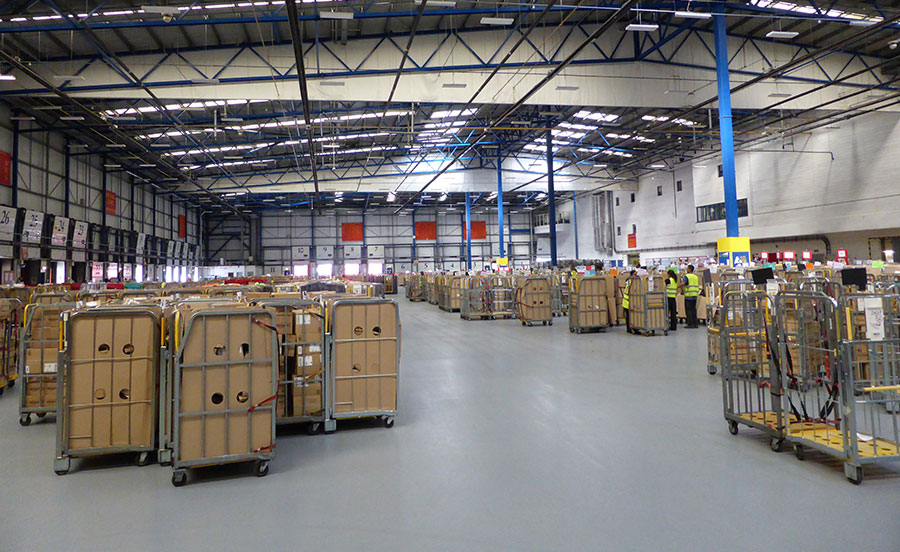
The kit is available in a variety of colours and especially suitable for damp surfaces while dramatically improving the ease of maintenance and cleaning of the coated surface. Water Based Epoxy also performs exceptionally well on surfaces exposed to aggressive environments such as; factory floors, tank linings, wet areas and food processing plants. Right Choice epoxy is used as the base coat in the Epoxy Flake Flooring system.
Please note; If the concrete is highly porous, it is recommended to prime the substrate prior to the application of the Water Based Epoxy with the Right Choice Aqua Prime.
* 10ltrs will do 2 coats over approximately 25m² – 30m² (concrete porosity dependent)
Please ensure to check the colour of the sealer prior to installation. Once the product has been applied, Right Choice can take no responsibility for any discrepancies in colour variations.

Coverage rates will be determined by how porous the concrete is (how easily water soaks in). The easier and quicker that water soaks in, the more porous the concrete is and the more product you will use. The preparation guide has information on how to perform this simple test.
How To Calculate m²
Length of Substrate x Width of Substrate = Total m²
Ensure the concrete has sufficient porosity for the sealer to penetrate.
Dip a finger into a glass of water and apply 2-3 drops to the surface.
Time the amount of time it takes for the water to soak into the concrete.
For sufficient porosity to apply a sealer, this should be no longer than 90 seconds.
Repeat the test over multiple sections of the concrete substrate.
If under 90 seconds then the concrete has sufficient porosity for application of the sealer.
If longer than 90 seconds, then it may be necessary to either acid wash or diamond grind the concrete to open it up and create the required porosity.
Moisture
The substrate must be dry and free from any rising moisture.
Ideally use a concrete moisture meter to determine the moisture content. If this is not available, proceed using the method below.
To test for moisture, cut a piece of thick black plastic into 1m².
Ensure that it is free from any tears or pinholes (this would render the test useless).
Attach the plastic to a section of the substrate (repeat in other areas) & duct tape the edges.
It is important that the plastic is completely sealed around all edges and free from holes.
After 24 hours, remove the plastic. If the concrete has darkened or there is condensation under the plastic, then the concrete is not sufficiently dry to apply a sealer or coating.
If the substrate is not dry enough then either wait a few more days & repeat the test or it may be necessary to use a concrete moisture barrier. Contact Right Choice for advice.
Contamination
All substrates must be clean and free of contamination i.e. oil, grease, bird droppings etc.
Many of these contaminates are easily removed using the Right Choice Concrete Cleaner.
In some cases it may be necessary to use a concrete grinder or a light acid wash.
Basically, if water does not penetrate through the contamination then neither will a sealer or a coating.
Acid Etching
If required, the concrete can be lightly acid etched prior to sealing. This will help to remove any contamination and create a more porous surface.
Use extreme caution and safe handling methods when using hydrochloric acid.
Dilute the hydrochloric acid with water at a rate of 10% (1 part acid to 10 parts water).
Apply the diluted solution evenly to the surface using a watering can.
Allow the acid to bubble on the concrete for up to 15 mins.
Once the bubbling has ceased, thoroughly hose the surface off (abide by local laws for disposal).
Neutralise the surface using the Right Choice Concrete Cleaner (highly alkaline). Allow the surface to dry for a minimum of 24 hours.
Ensure to read the TECHNICAL DATA SHEET, the PREPARATION GUIDE and the APPLICATION INSTRUCTIONS thoroughly first.
It is recommended to do a test patch first to determine the suitability of the product.
Epoxy is not designed to be applied to outdoor substrates. It is NOT uv stable.
Do not apply when the ambient temperature is below 15c or above 28c.
The substrate must be cool to touch before applying any sealer or coating.
Always follow the manufacturer’s guidelines for coverage.
Generally only two coats are required, however on a highly porous surface then a third coat may be necessary.
Alternatively, prime with Aqua Prime on a highly porous surfaces.
Mixing
Pour the tint pack into “part A” and mix thoroughly.
Once mixed, slowly pour “part B” into “part A” while still mixing. Mix for approximately 2 minutes using a slow speed drill and squirrel mixing paddle. Allow to stand for 1 minute & then mix again for 1 minute.
Only mix enough epoxy that can be used within 25 minutes.
Applying the 1st Coat
Always wear the appropriate personal protection equipment.
Water Based Epoxy should be applied using a 10mm – 12mm nap, lint free roller cover.
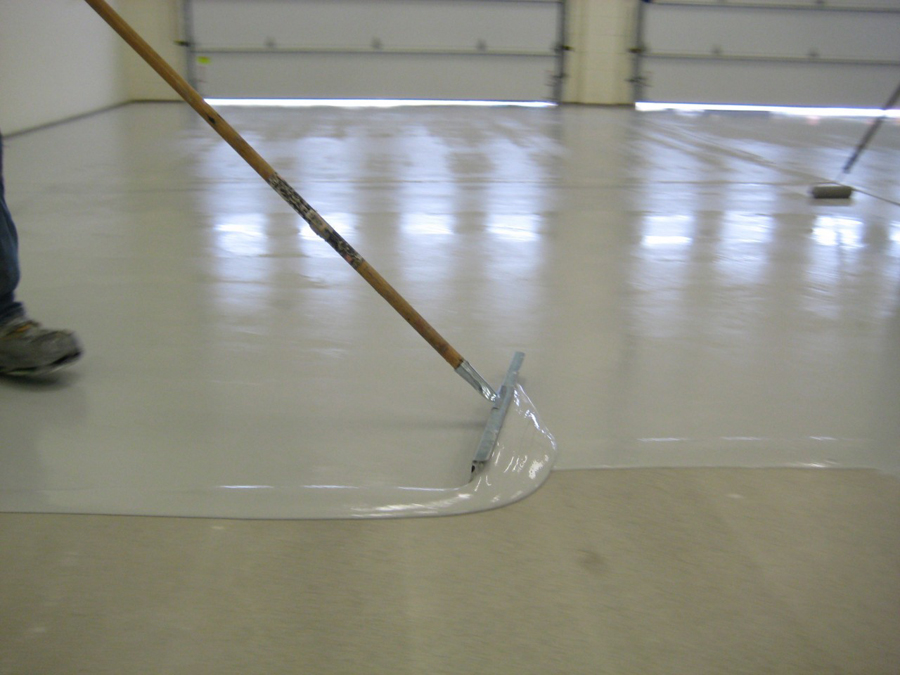
Immediately pour the epoxy onto the substrate in ribbons.
Do not leave the epoxy in the bucket as it will go off much quicker.
Use a new bucket for every new batch that you mix.
Never mix a new batch in a previously used bucket as this will accelerate the setting time of the epoxy and you decrease the working time dramatically.
Spread the epoxy with a squeegee or roll out roughly to achieve the correct m² per litre.
Once the spread rate is achieved, gently “tip off” the epoxy with the roller and move on to the next section. This will allow the epoxy to self-level.
The more times you roll it, the more chance there is of it going off too quick and getting roller marks.
Ensure to keep “wet edge” of the epoxy to avoid any overlapping marks or roller marks.
Lightly sand the first coat using a sander or sanders pole with a 180# sandpaper. If the epoxy produces a fine dust it is dry enough to sand, however if it is clogging up the sandpaper then you will need to wait longer for it to cure.
Thoroughly vacuum the first coat after sanding and remove any dust particles etc.
Apply the second coat in the same manner as above.
Once the second coat is finished, allow a minimum of 24 hours drying time before walking on and 10 days before driving over.
The more air flow and warmer conditions, the quicker the epoxy will cure. Colder conditions and no air flow can cause a lengthy delay in the epoxy curing.
right choice coatings are number 1 in floor coating systems i have been using there products for more than ten years never had any problems easy guys to deal with.
Rated 5 out of 5
Brendan Rhodes –
worked well on my factory floor. Easy to use and clean
darien –
right choice coatings are number 1 in floor coating systems i have been using there products for more than ten years never had any problems easy guys to deal with.
Brendan Rhodes –
worked well on my factory floor. Easy to use and clean